


BluePes Blog: Insights & Trends


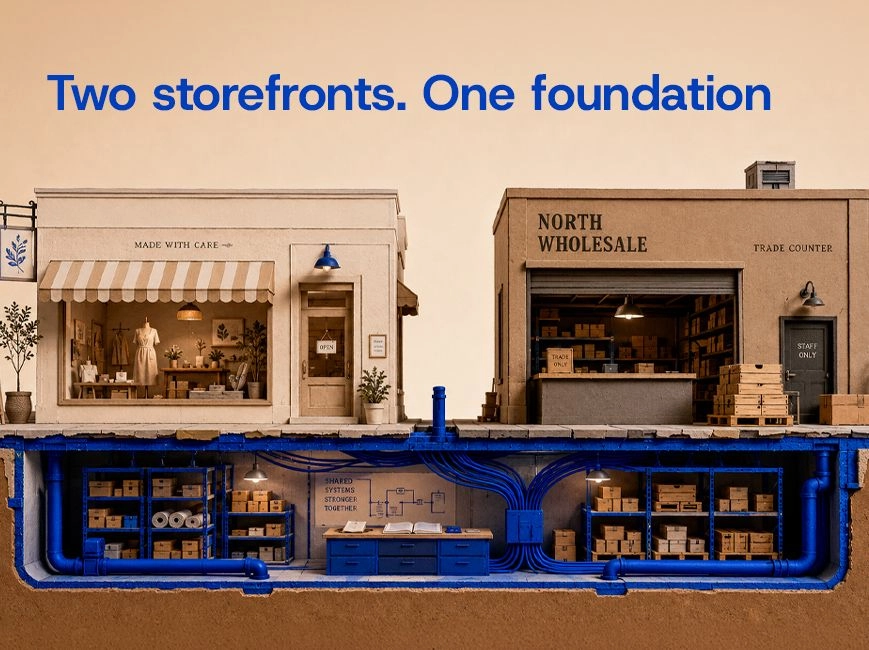
Separate storefronts or one platform on a shared backend
This piece is about that topology decision and the shared backend underneath it, not about how to model the B2B side once you have chosen — that modeling is its own subject, linked below. By the end you should have a decision framework you can apply to your own platform, a clear view of what the shared backend has to provide regardless of approach, and a sense of when neither option is worth building yet.
- Jun 21, 2026
- 16 min


Ecommerce scalability and performance for peak season
Auto-scaling does not save you when the bottleneck has moved to a synchronous call that did not exist last year. Preparing a seasonal platform is less about handling load in the abstract and more about knowing where this year's stack will fail under concentrated demand, and testing for that specifically. The article walks through where seasonal platforms typically break, how to model peak traffic accurately during load testing, and how to design for scale-up and scale-down so you stop paying for January capacity in July.
- Jun 12, 2026
- 15 min

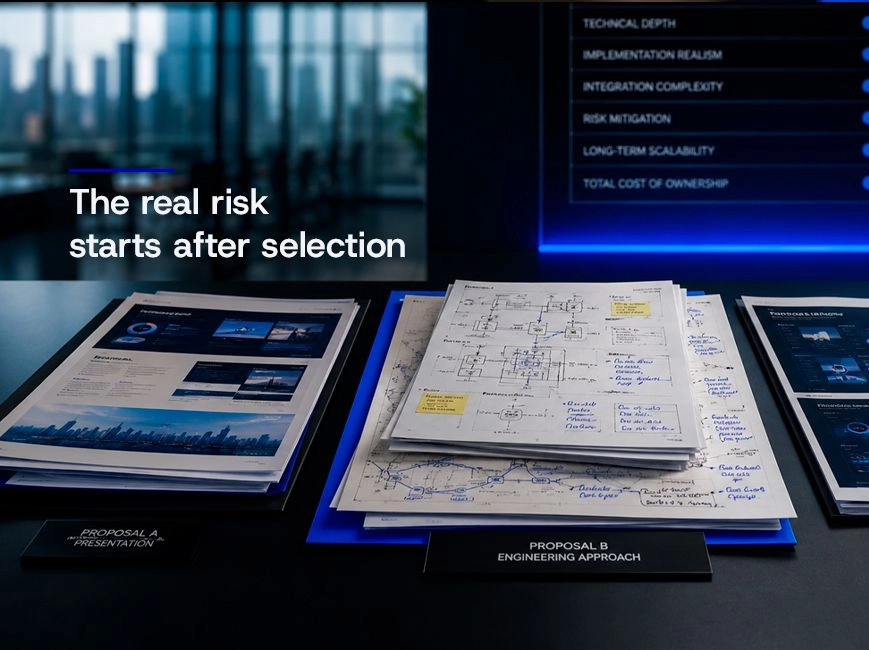
E-commerce RFP technical questions vendors must answer
This article gives eight questions worth adding to an e-commerce development RFP and explains what a strong answer, a weak answer, and a direct Bluepes-style answer should look like.
- May 29, 2026
- 16 min

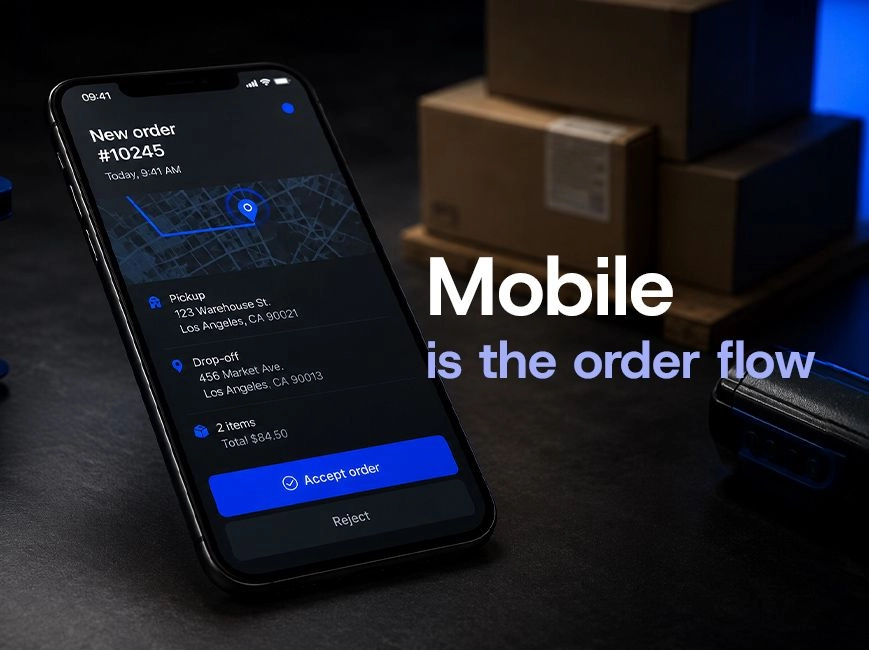
Supplier mobile app for marketplaces: a decision guide
For marketplace teams with a functioning supplier dashboard, the next decision is whether to extend it with a mobile experience and what shape that mobile product should take. The reader of this piece already has operational evidence on where vendors fall out of the flow. The question is whether a supplier mobile app for marketplaces is worth the engineering investment, and which architectural decisions matter most if the answer is yes.
- May 28, 2026
- 16 min

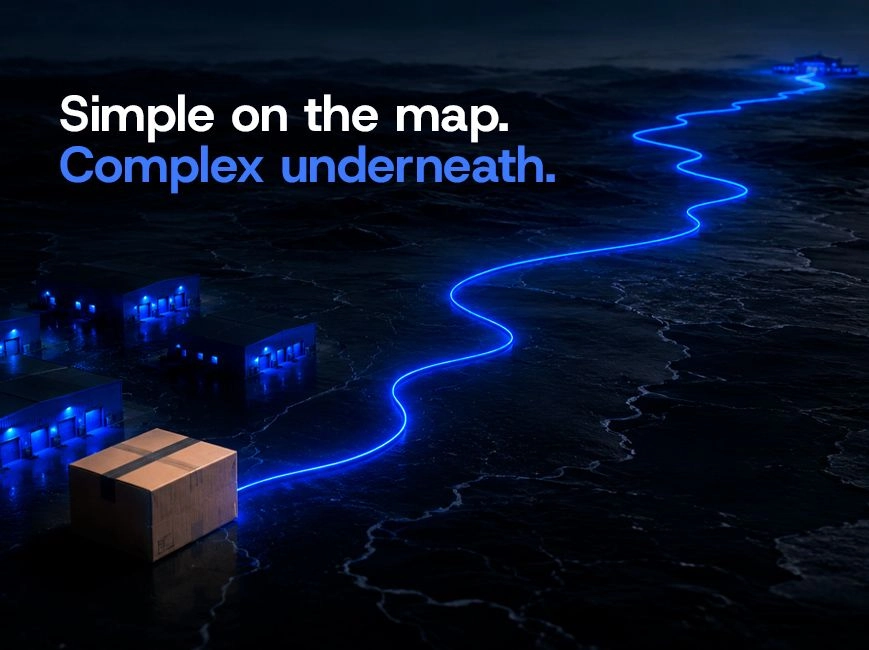
Location-based order routing: where geo-routing breaks
Location-based order routing is an architectural choice that touches four systems at once — supplier registry, inventory visibility, pricing logic, and customer-facing UX. The routing algorithm itself is usually the smallest part of the work. Most marketplaces hit this point when delivery cost starts to dominate the customer's experience of the platform.
- May 22, 2026
- 15 min


Marketplace plugin vs purpose-built platform: when to move
Marketplace plugin vs purpose-built platform is not a feature comparison. A plugin is an adapter over someone else's commerce architecture. At low volume the adapter holds. As the operating model grows — multi-jurisdiction payouts, custom routing, per-vendor pricing and inventory variation — the gap between what the plugin allows and what the business needs widens into operational cost. At that point the architecture decides the next eighteen months of the business, not the feature roadmap.
- May 15, 2026
- 15 min

Why Your ERP Integration Fails Silently Under Load
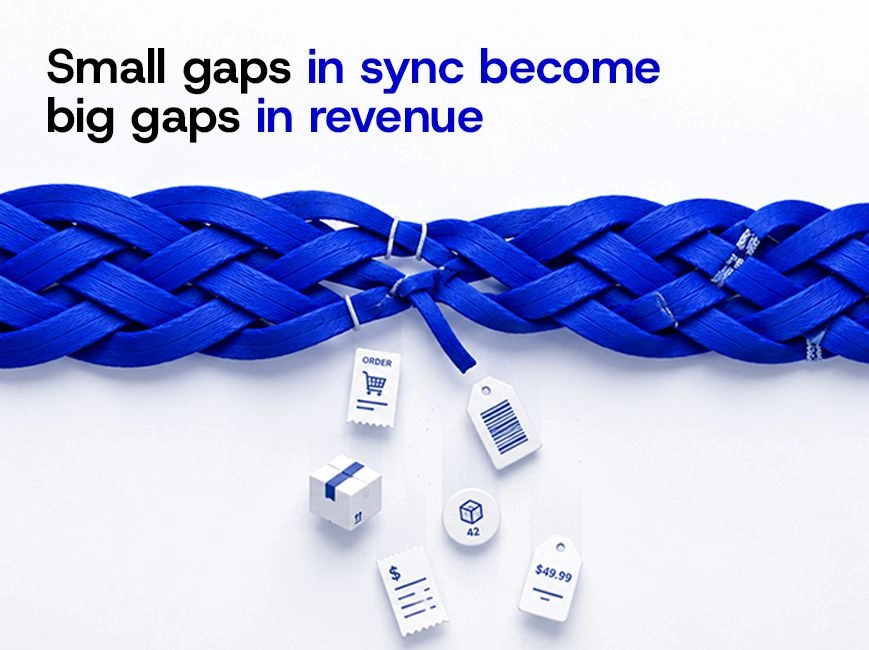
These ERP integration failures are the most expensive category of integration problem in e-commerce because they don’t generate tickets or on-call pages. They surface as accounting discrepancies weeks after the data diverged, when the cost of diagnosis and correction has already multiplied. Almost always, they trace back to four architectural decisions that were either made implicitly or not made at all when the integration first went live: field-level data ownership, sync model selection per data type, bidirectional idempotency, and pre-incident observability. Each gap is diagnosable in a running integration, and each has a fix that does not require a full rewrite.
- May 08, 2026
- 15 min

Why Small BI Projects Fail Before They Even Start
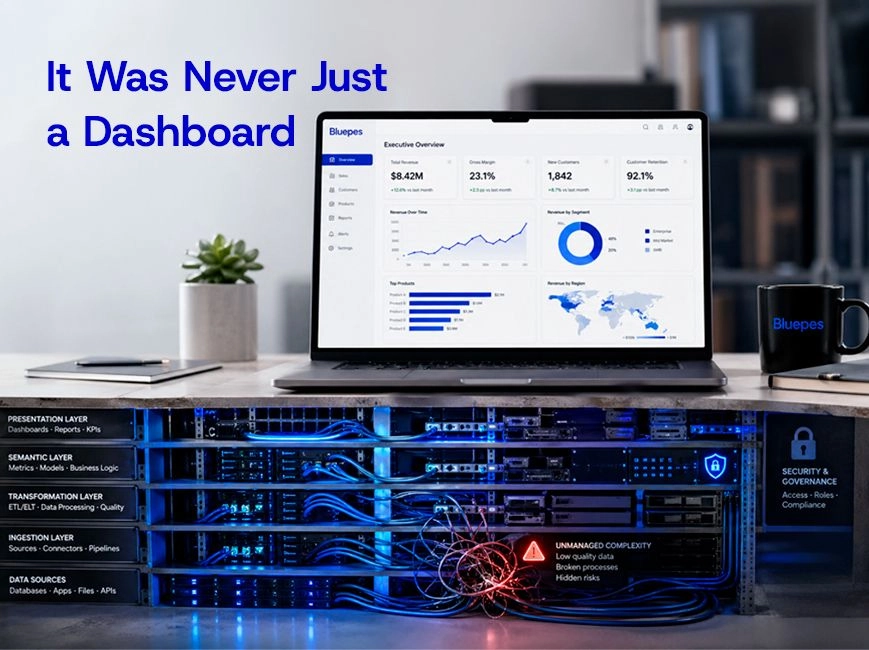
The core issue sits below execution — in the gap between what the project was scoped to deliver and what the data environment actually requires. A dashboard looks like a reporting deliverable. Behind it sits a chain of decisions about data ingestion, transformation, modeling, access control, and refresh scheduling. Underscope any one of those layers, and the project either stalls mid-delivery or produces output nobody trusts enough to act on.
- Apr 30, 2026
- 16 min


BI project estimation starts before the first dashboard
The short answer: most BI scoping underestimates happen because the client sees the reporting layer and nobody maps what feeds it. Data ingestion, storage, and transformation aren't optional add-ons — they're the foundation. When they don't exist, the project scope changes. Not because the vendor is inflating the work, but because the work was always there.
- Apr 24, 2026
- 15 min