


BluePes Blog: Insights & Trends



Preorder ecommerce: building deferred-payment order flows
This is an engineering walkthrough for teams building a preorder flow for a seasonal product, written for the CTO or product lead who has already decided they need it and wants the implementation depth. It covers the two payment models and the scheduler they depend on, supplier-specific availability dates, the cart rules that keep conflicting future-date items apart, and the timing of inventory commitment. The examples come from a marketplace we built that shipped preorders with deliberate limitations and expanded from there.
- Aug 21, 2026
- 16 min


Group buying architecture for delivery marketplaces
The interesting part of group buying lives in the order logic underneath the discount. This article covers how the model works in delivery commerce, the radius and discount-tier choices that shape it, and the failure mode that breaks real implementations — open-ended groups that accept members after delivery has been planned. The examples come from a marketplace we built that added group ordering and then had to fix exactly that.
- Aug 14, 2026
- 16 min


White label app development: build vs runtime config
This is the architecture-decision version of the topic, written for the frontend lead or CTO who has to make the call rather than the buyer comparing app builders. It covers when each approach fits, a real project that used build-time configuration for its web apps and runtime selection for its mobile app, and the failure mode that turns a clean build flag into branching logic scattered across the codebase.
- Jul 31, 2026
- 16 min


Hyperlocal delivery: address resolution and matching
This is an engineering walkthrough for teams rebuilding their address and supplier-matching layer after discovering that a postal-code approach causes complaints and rework. It covers moving to coordinate-based resolution, handling the addresses a maps API cannot fully resolve, and treating availability as more than distance. The examples come from a marketplace that made exactly this migration, from postal-code matching to full coordinate resolution.
- Jul 30, 2026
- 16 min


Product bundle pricing: snapshotting and vendor rules
This piece is written for both sides of that conversation: the product or marketing lead deciding whether to add bundles, and the engineer who has to build them without breaking historical orders or constraining vendors. It draws on a marketplace where packages drive most of the revenue, and it covers the rules, the pricing models, and the one engineering choice — snapshotting — that quietly determines whether your order history stays honest.
- Jul 24, 2026
- 16 min


Peppol e-invoicing for B2B platforms: the architecture
This is an integration walkthrough, vendor-neutral by design, written for teams that need to understand how Peppol fits their platform without becoming Peppol specialists. The reference points come from a Norwegian marketplace whose chain customers are invoiced over EHF, the local Peppol format, with each invoice handed off to downstream accounting. By the end you should know what a Peppol-ready invoice flow involves and which decisions are yours to make.
- Jul 17, 2026
- 16 min


Code freeze: release management for seasonal peaks
Two things tend to surprise teams new to this. First, for a seasonal business the freeze rarely fits in a long weekend around Black Friday; it can run for months, as long as the peak itself. Second, the freeze reshapes the roadmap, because anything large has to land before it starts. The examples here come from a seasonal firewood marketplace whose peak runs through autumn and winter, with the rest of the year reserved for the bigger work.
- Jul 10, 2026
- 16 min


Dynamic route optimization when indexes aren't enough
This is an engineering case rather than a tutorial. It draws on a Norwegian firewood-delivery marketplace where route recalculation dropped from five-to-seven seconds to under one, and a multi-condition availability query fell from three-to-five seconds to about one. The numbers matter less than the reasoning behind them: how to tell when the answer is a better algorithm, when it is caching, and when it is simplifying the work itself.
- Jul 03, 2026
- 16 min

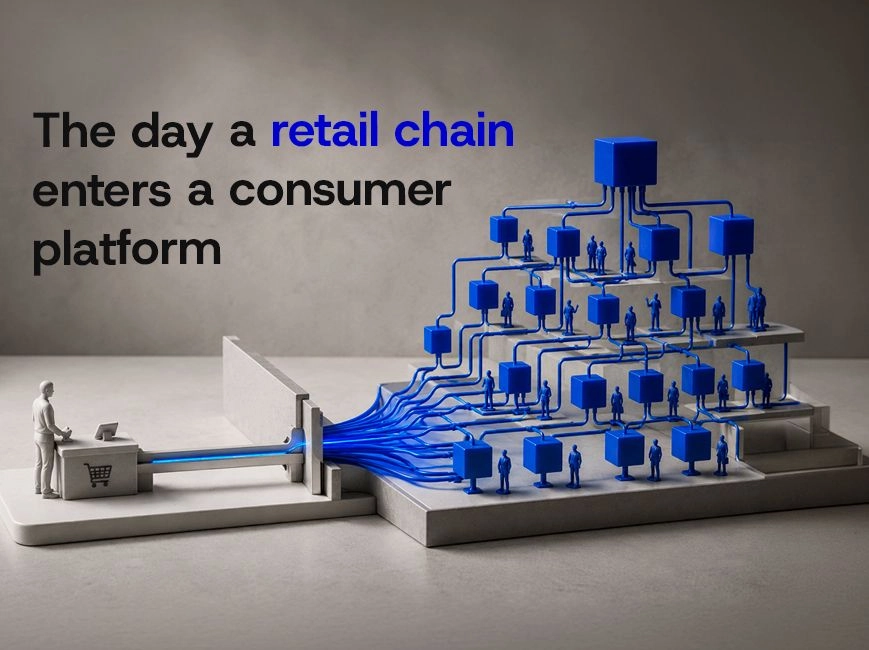
B2B B2C hybrid commerce without breaking B2C flows
The build that follows draws on a Norwegian firewood marketplace that runs a consumer webshop and a chain-customer webshop on the same platform. By the end, you should be able to decide where chain hierarchies, per-account pricing, and invoice-based order lifecycles belong in your own system, and where bolting them onto consumer flows will cost you later.
- Jun 28, 2026
- 16 min